Product
dtcpay mobile app & web portal
Worked with
Product Manager Engineers Compliance team Sales
Scope of work
Context gathering Problem definition UI/UX design
Design Timeline
Mar 2025 (~1 mon)
Case Overview
This case is about how I navigated ambiguity, gathered context, and aligned the team on assumptions and goals — ultimately delivering a low-effort solution to a low-impact (but worth solving) problem. The final design is simple, but the process showcases how I approach clarity and decision-making. Looking for something more complex? See my Ninja Van project.

Context Gathering
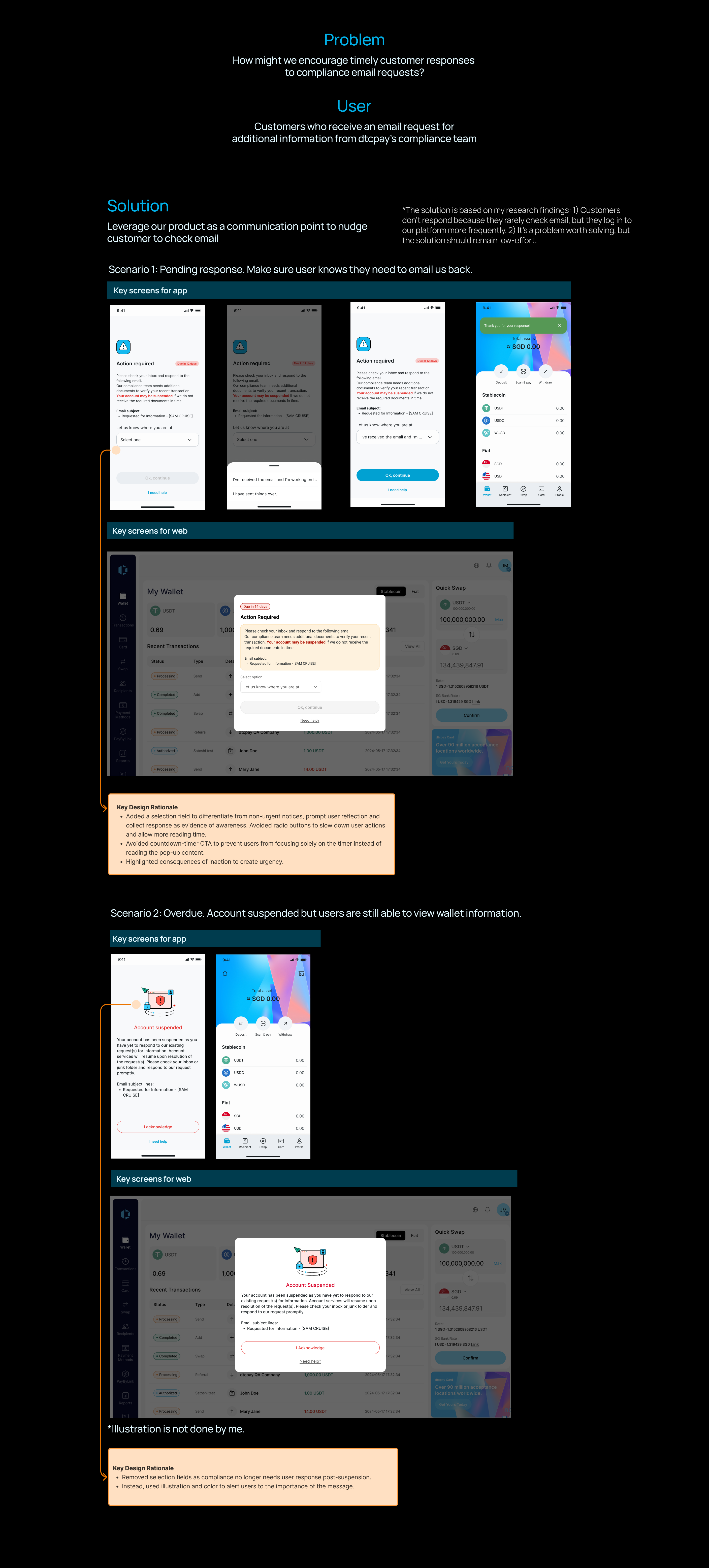
To Start, No Context
When I first receive the design request, there’s only a symptom: Compliance teams struggle to get customers’ email responses.
This leaves me many questions: Why compliance need the email? How does compliance handle the issue right now? How big is the problem? What have we tried?
To understand the current state, I initiated conversations with the compliance team and brought the PM into the discussion to align everyone early.
Understand the current scenario
Walk me through a typical case where compliance need to gather information from a customer?
What’s done previously
What solution have they tried before and how effective is it?
How big is the issue
What issues do you face with the current solution? How often does it happen?
What We Learned
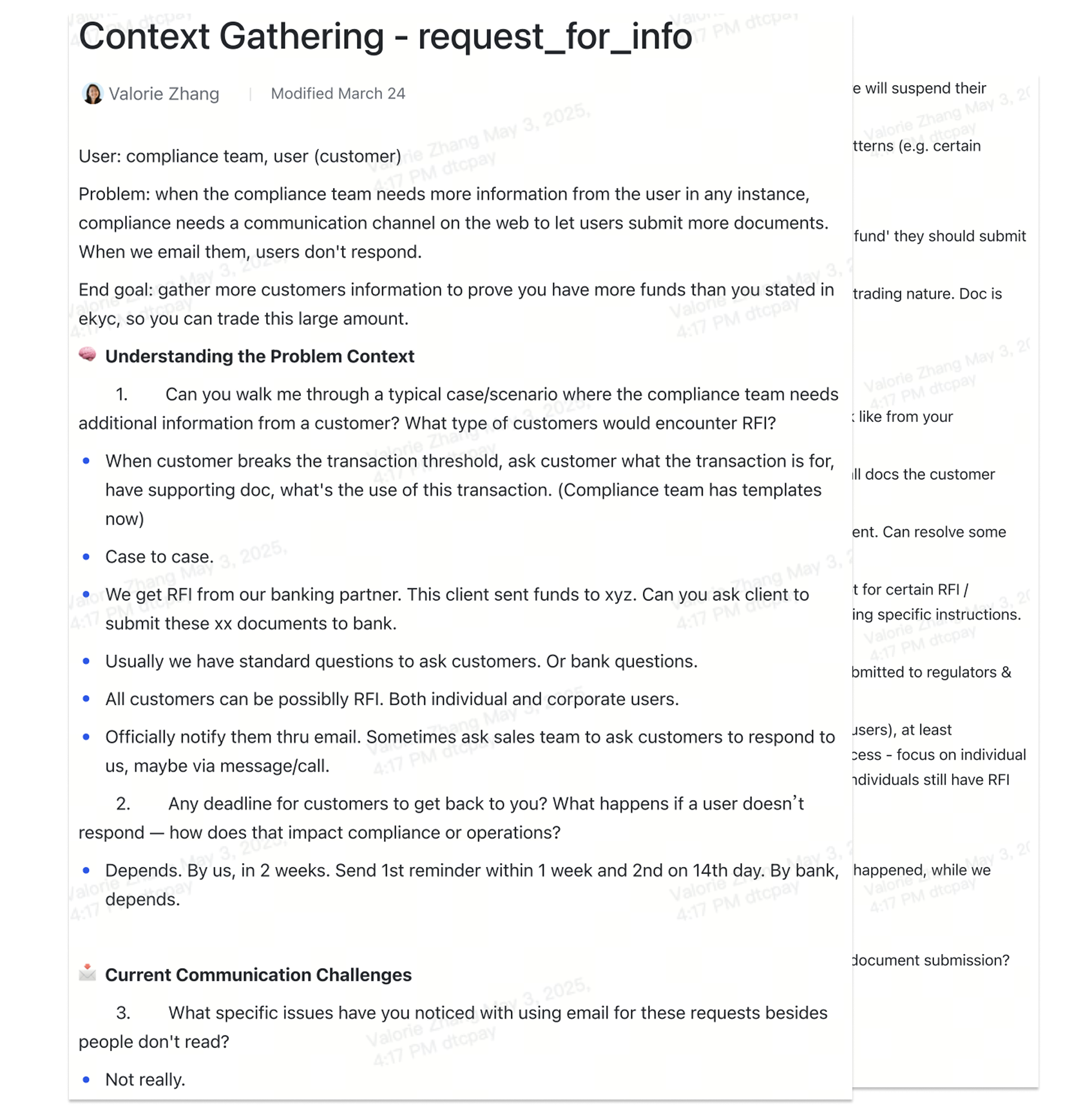
RFI (Request for Information) is triggered when a customer’s activity (like a large or unusual transaction) doesn’t align with what was previously disclosed (like declared assets). Compliance handles these cases via email only, which often requires multiple back-and-forths to gather the right documents and resolve the issue.
Compliance has no direct communication to notify users to check their email. When accounts are suspended due to no response, compliance lacks visibility to prove customers did get the email but they just chose to ignore us.
Currently, what Compliance has tried is asking account managers to message or call customers to prompt a reply, which improves response rates but adds manual workload.
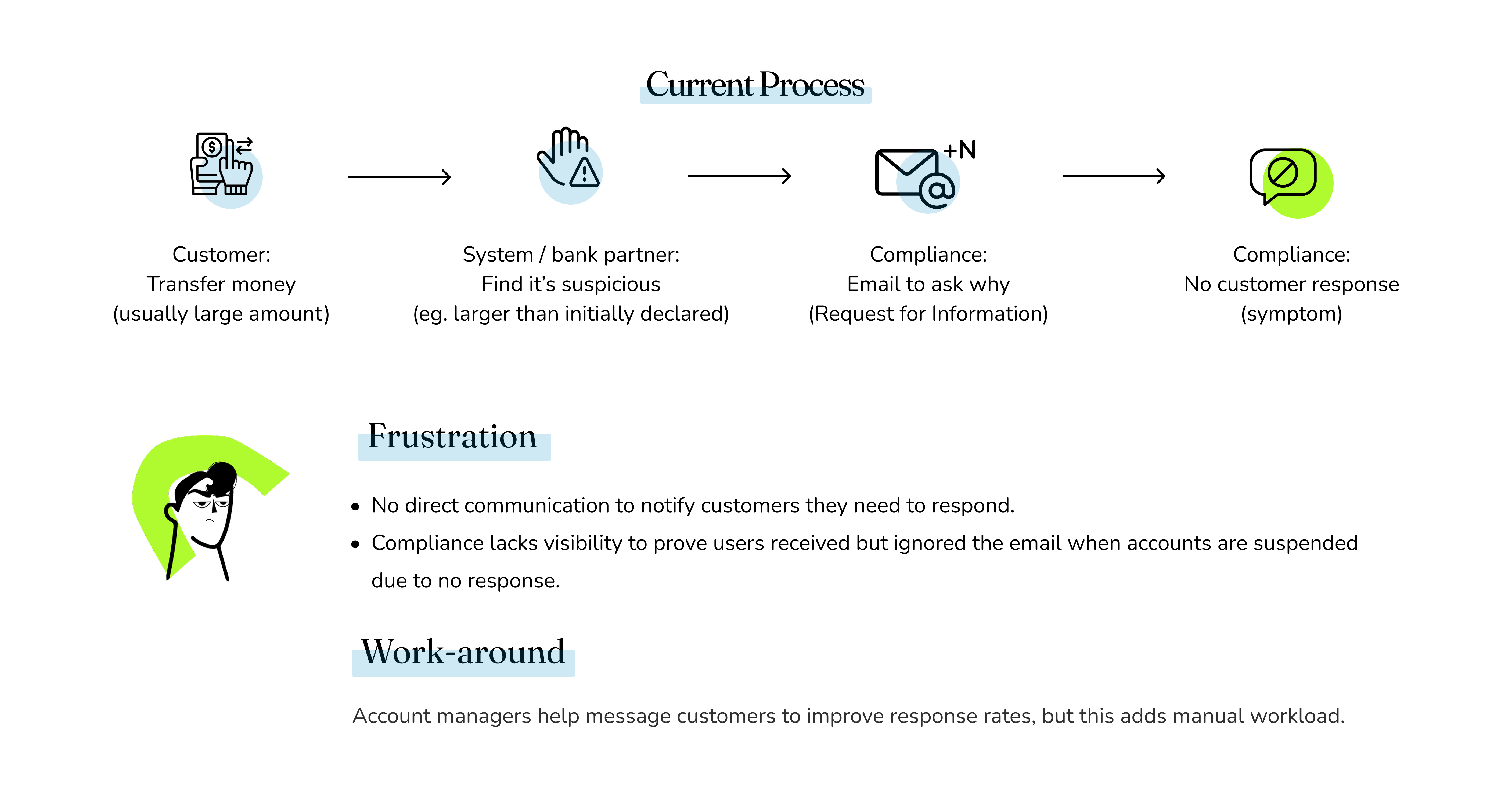
On average, 3 out of 20 RFI cases per month go unanswered—resulting in account suspensions and frustrated high-net-worth customers at risk of churn. The process consumes 10% of 2 full-time staff’s workload. Future Risk: As we expand into the mass market, RFI volume may increase, potentially leading to more suspensions, more unhappy users, and greater customer loss.
Alignment
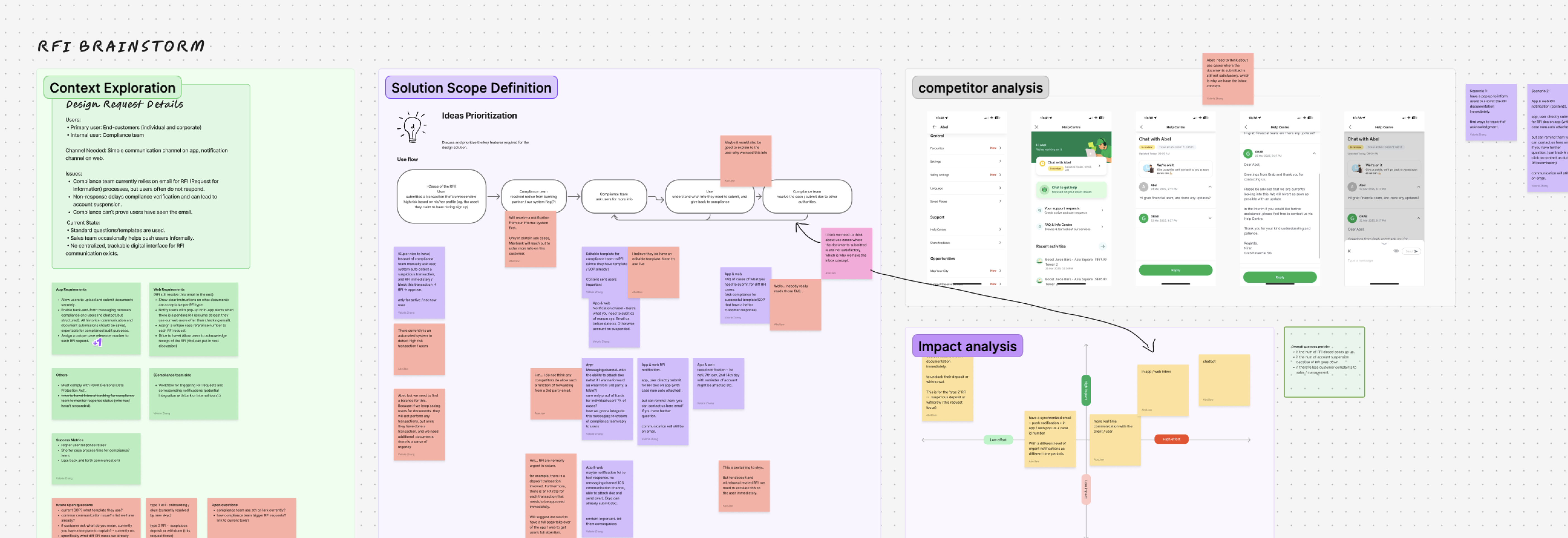
After gathering context, I mapped insights in FigJam, aligned with the PM on our understanding, defined assumptions, discussed success metrics and brainstormed possible solutions.
Assumptions
We had many assumptions, and in the end, we focused on two that made the most sense and were supported by evidence.
Customers will respond—as long as they know they received the email.
Evidence: currently compliance relies on account managers to prompt customers, which improves response rates but adds manual workload.
User rarely check email but more frequently log in to view RFI-related transactions.
Evidence: RFI email is triggered when a transaction exceeds a customer’s declared assets. Users typically check the app or web soon after they initiated this large amount of transaction, making it a key moment to reach them.
Other assumptions we had but currently lack supporting evidence: 1. Friction from switching between the dtcpay app and email reduces RFI response rates. 2. Lack of clear guidance on required documents causes confusion, delays, and open cases. 3. Customers perceived the email as unimportant.
Scope Solutions
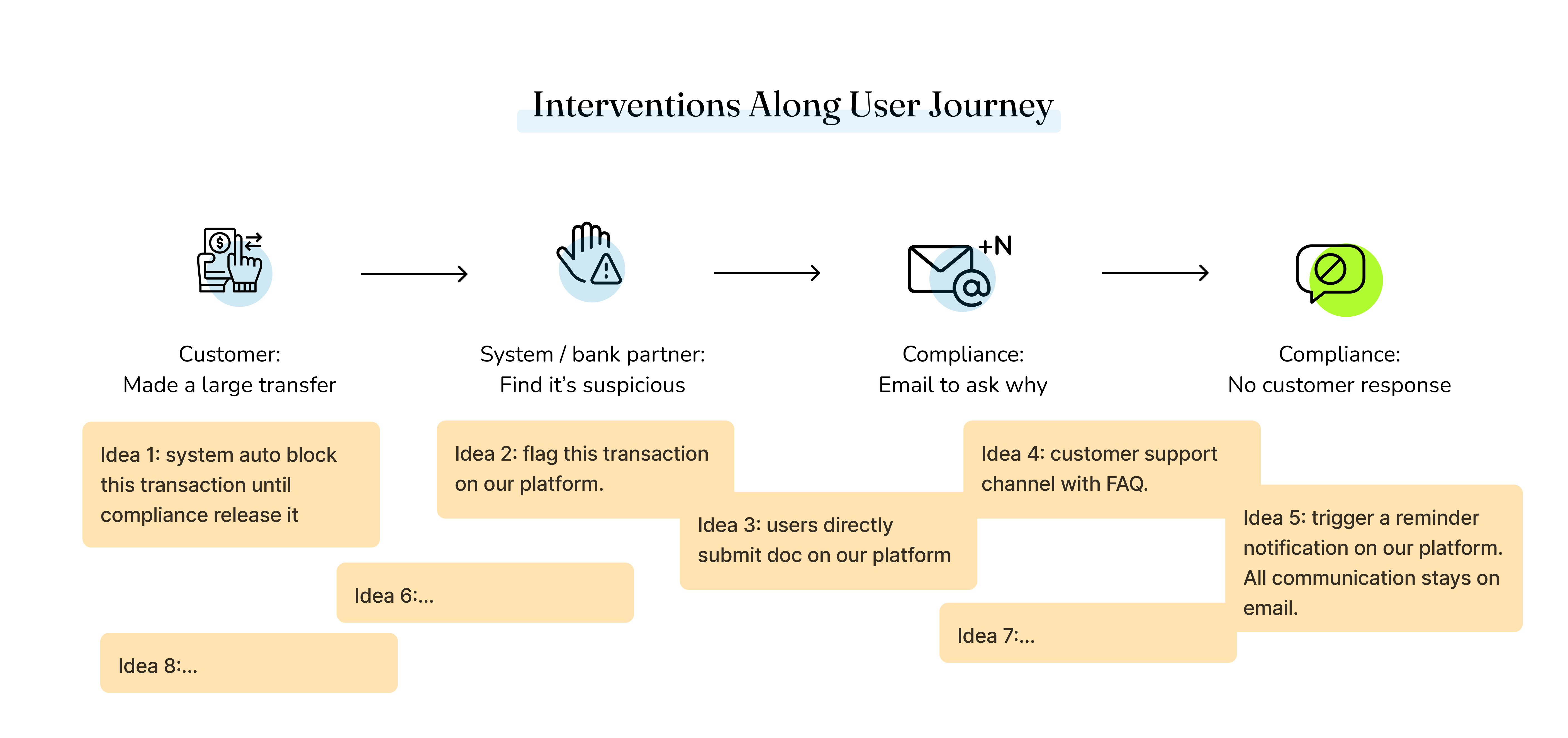
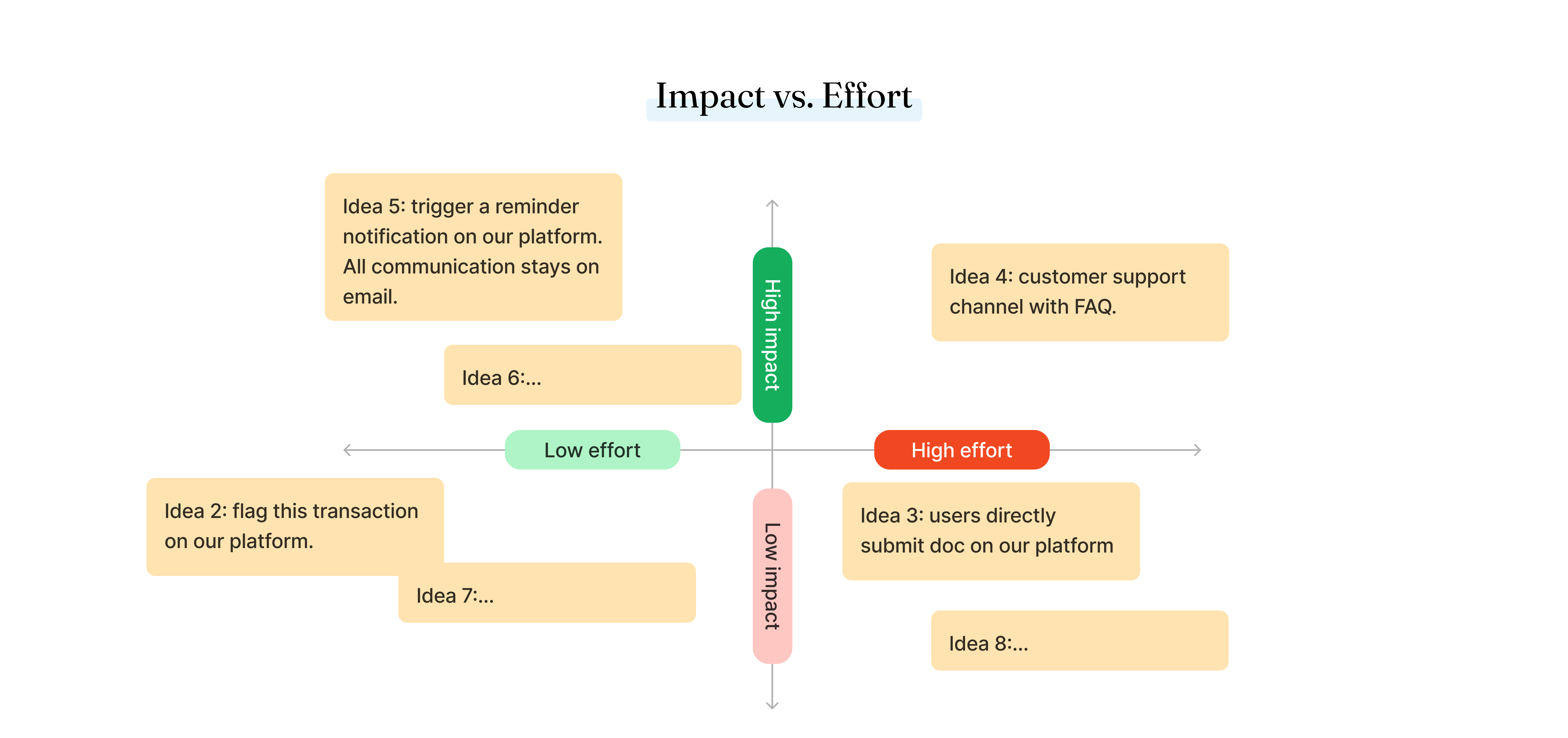
When ideating with the PM, I mapped out possible interventions across the user journey. We visualized and prioritized ideas, and later shared these alternatives with stakeholders to show we had explored more than just one idea.
Narrow Down to One Solution
We know the impact of the issue:
Therefore, it’s a worth solving problem, but the solution should stay low-effort.
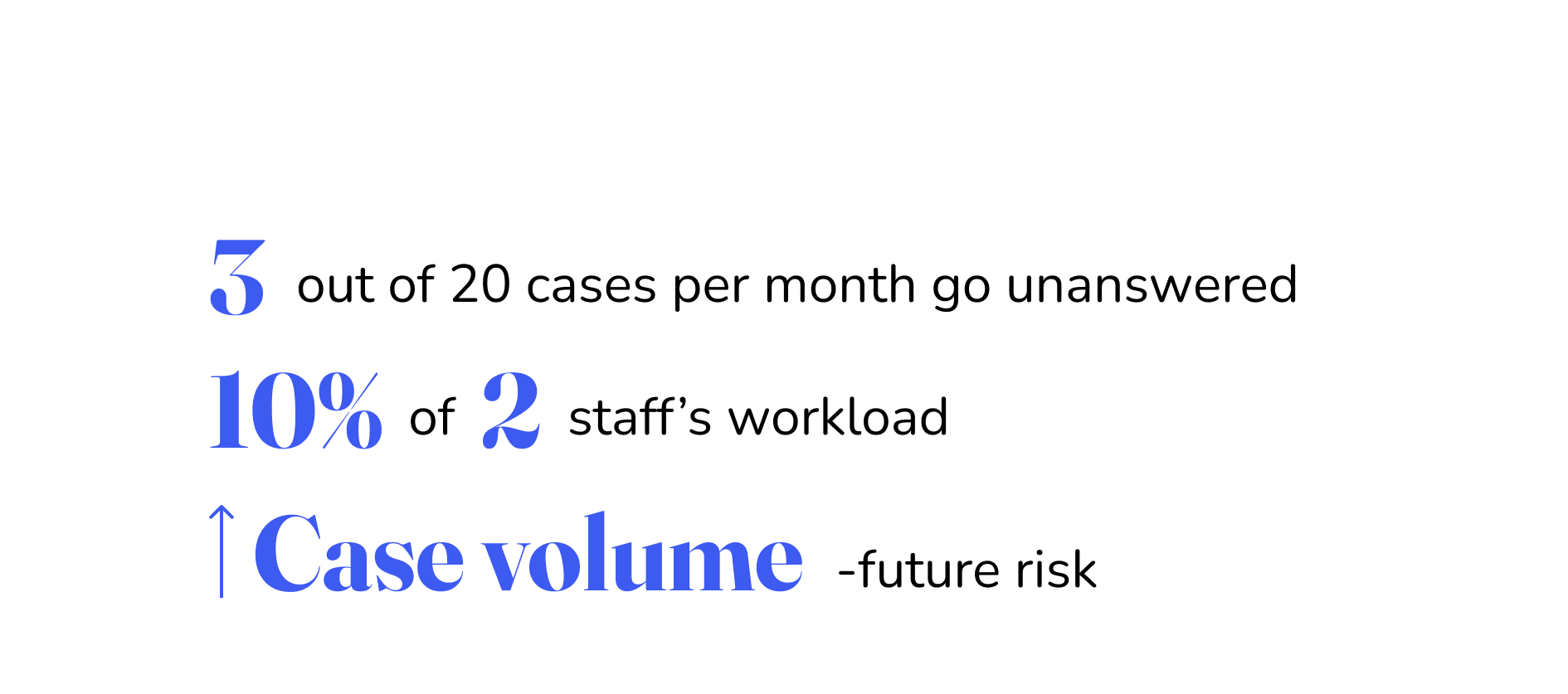
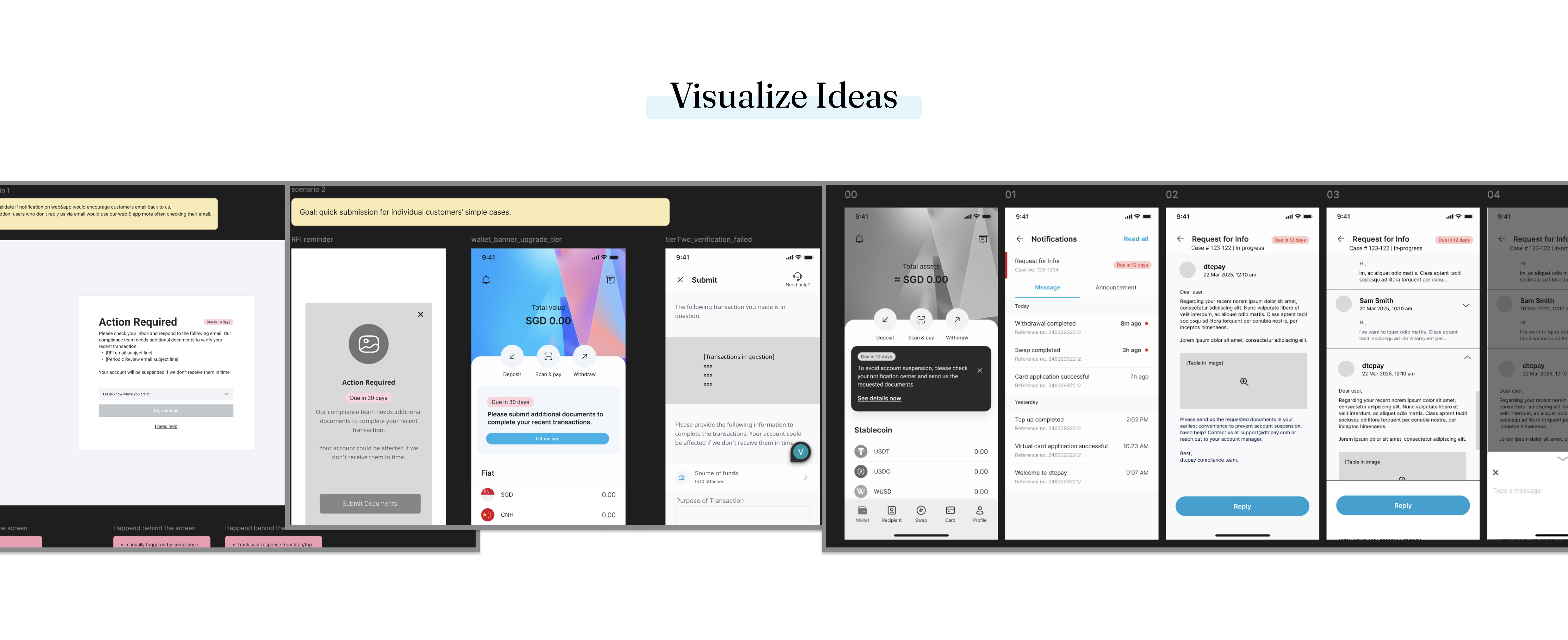
The final solution we all agreed upon, is to use our platform as a communication touchpoint to prompt customers to check their email, while the resolution of RFI cases continues to be handled via email.
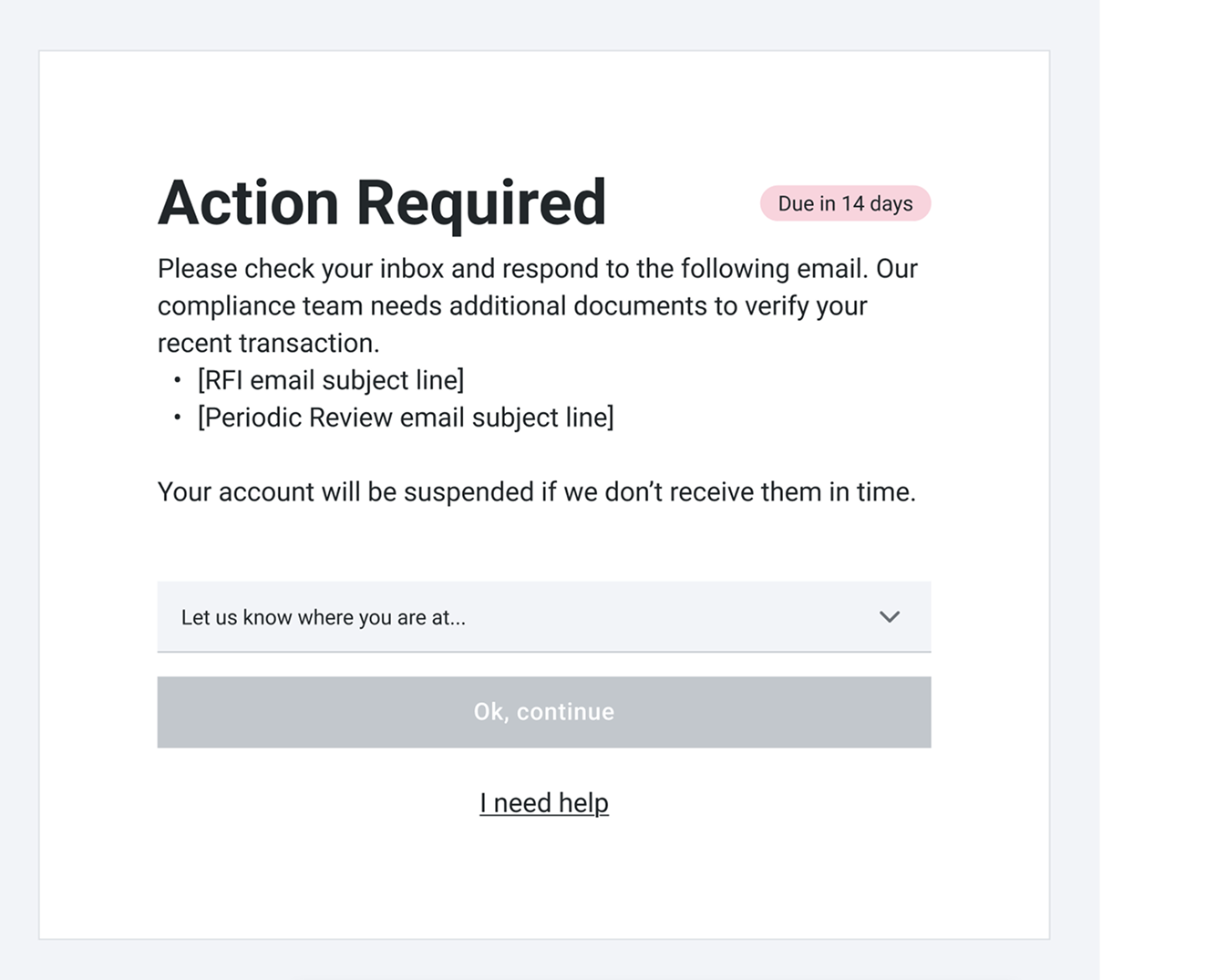
This solution is based on two research-backed assumptions: customers rarely check their email but log in to our platform more frequently—and once aware of a pending email, they will respond.
You Might Be Wondering…
❓ Why No User Interviews Yet?
We considered interviewing users with past RFI cases but found it sensitive and impractical because:1. Those who ignored compliance emails are unlikely to respond to interview requests.2. Asking why they didn’t reply may come off as accusatory.3. Even users who did respond might worry, “Are many users flagged? Will I be next?”
To understand my research skill, view Ninja Van project. :)
🧠 Where We Got Insights Instead
Instead, we gathered input from sales and compliance teams, who regularly interact with customers about RFI. Their insights were sufficient for identifying pain points and shaping the solution.
📈 Why We Launched First, Then Measure
Given the context, we chose to ship a lightweight solution first and monitor its impact—balancing risk, effort, and the opportunity to learn from real-world behavior.
🔍 Usability Testing is Still Planned
We’re planning a concept test for both our proposed solution and an alternative suggested by a senior stakeholder who wasn’t part of earlier discussions. Sales and Compliance will help validate the concepts, and if they can’t answer all our test questions, it will highlight the need for real user input—making it easier to gain customer access later.
Solution Details
Final Design
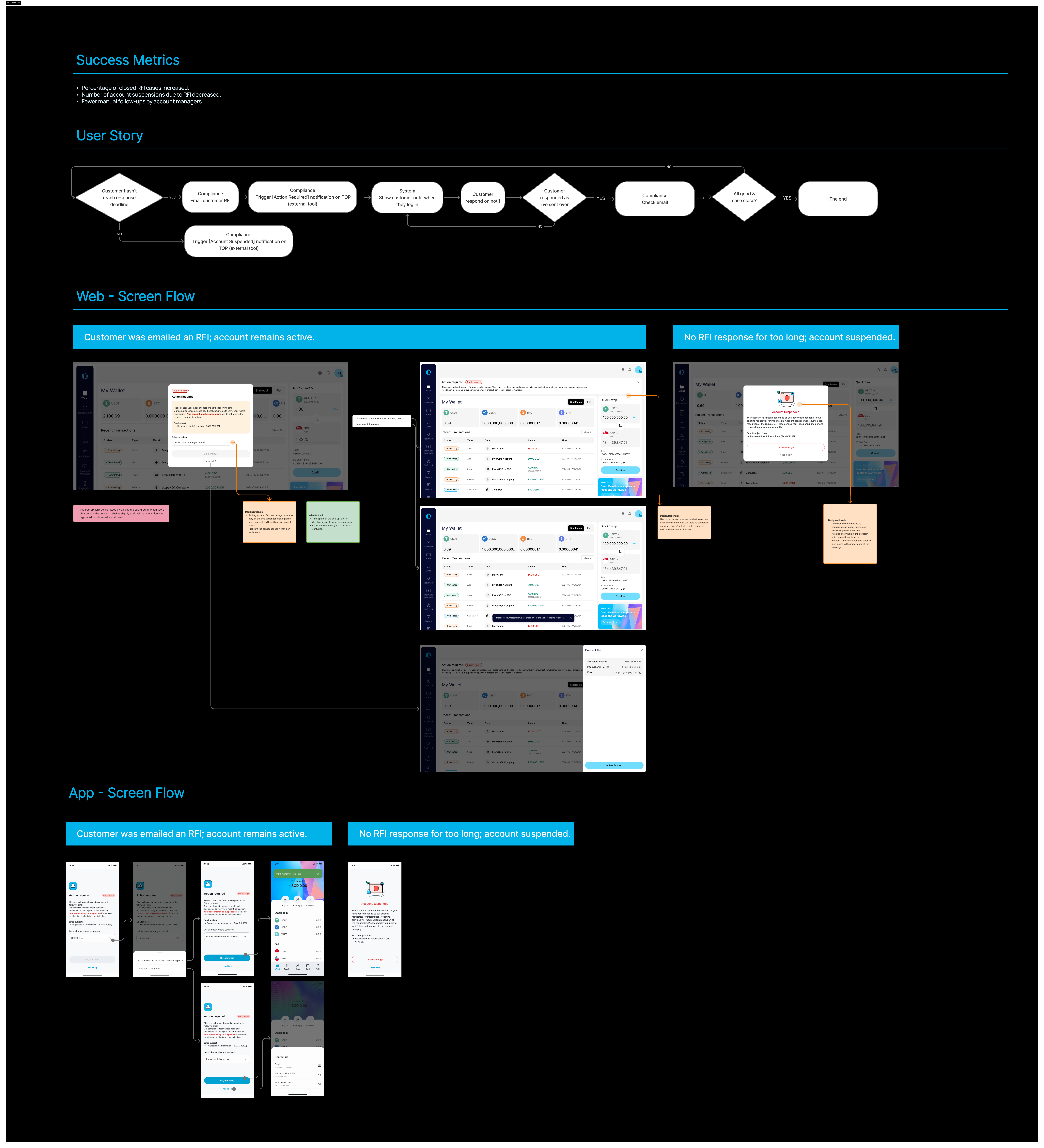
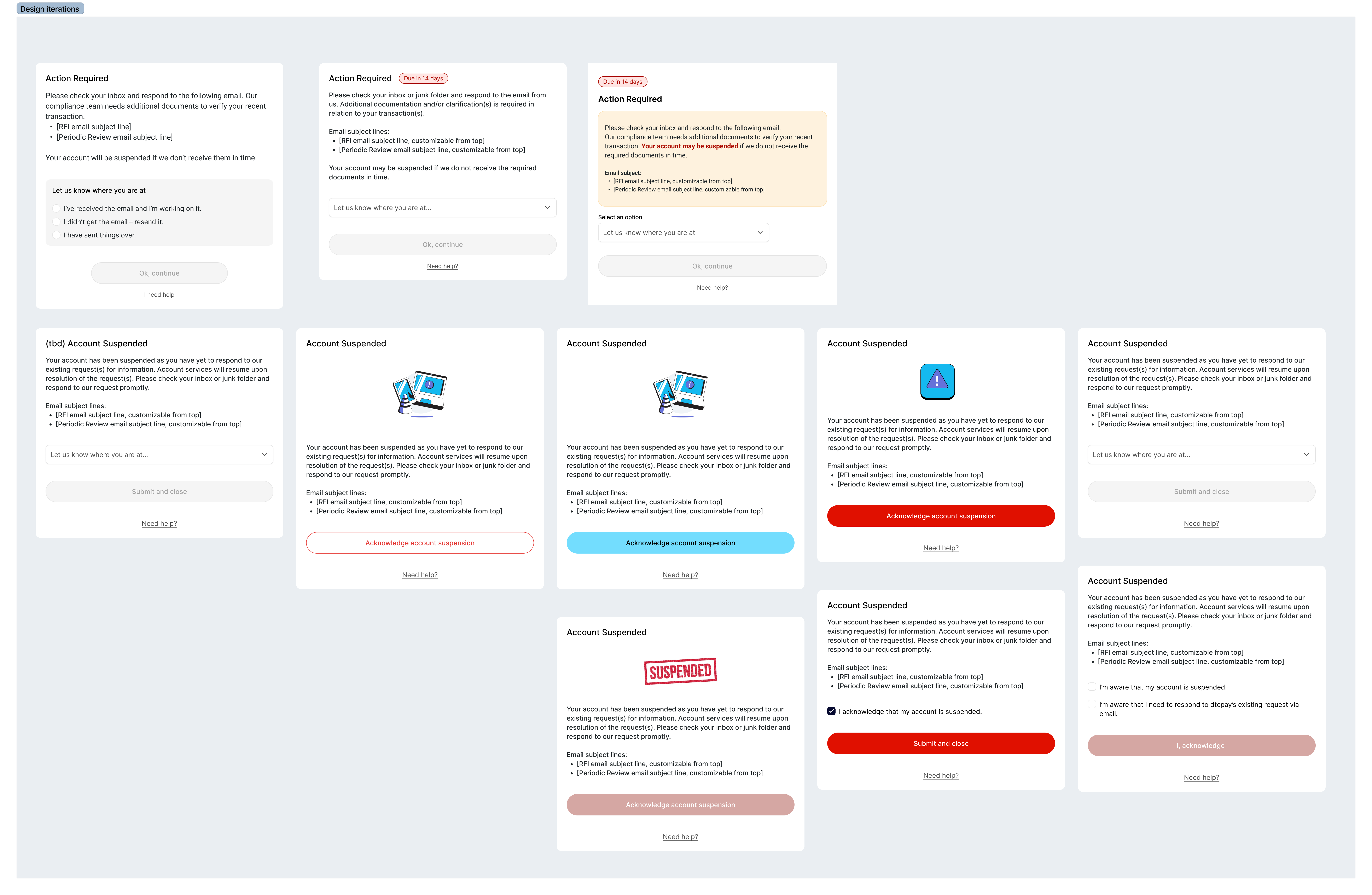
To view all iterations, success metrics, pixel-level work, design rationales, and tracking points, please refer to the Figma file. The design is scheduled to launch, so impact data isn’t available yet—but the key metrics to track have been documented.
To see the launched work and its impact, check out my Ninja Van project.
Lesson Learned
Want to know what I learned from this work? Talk to me! I don't bite :)